Snapshot: Land of Oz

Images of the Land of Oz theme park once located on Beech Mountain, North Carolina from AC.500: Appalachian Cultural Museum Records. Left: Land of Oz publicity photograph, Right: Original sheet music manuscript of "Did You Come to See the Wizard?" an original composition from the Land of Oz theme park soundtrack.

Shull's Mill Papers

As processing continues on the Appalachian Cultural Museum Records (AC.500), new collections have emerged from within the museum's wealth of historic documents and photographs. One prime example is the recently processed Shull's Mill Papers (AC.621). This collection features information about the family of Phillip Shull who, in 1835, set up a grist mill along the Watauga River. Through documents and photographs the collection follows the history and development of the Shull's Mill community from the early 1800s up until the mid-20th Century. Many of the documents relate directly to the Shull family and cover almost a century and a half of their history. Items of note include deeds from the early 1800s, mid-1800s debt settlements and deeds concerning the ownership of slaves, and photographs of Watauga County, North Carolina landscapes and people circa 1900.

Images from AC.621: Shull's Mill Papers, letter from Shull's genealogy information, circa 1965, group photograph includes from right to left: Jessie Shull, Ben Hardin, Bessie Isaacs, Russel Gragg, Addie Isaacs, Ernest Lineback, seated: Robey Shull, Mamie Shull, and Jim Brown.

Snapshot: North Carolina Foxhunters

Images from AC.500: Appalachian Cultural Museum Records, photographs originally included in an exhibit on foxhunting in North Carolina. Left: "Buster Ford , Blowing Rock, NC," photographed by Nancy Ford, 1996. Right: "Cornell and Blackie."

Appalachian Cultural Museum

Currently on the processing table this week are the Appalachian Cultural Museum Records (AC.500), an unprocessed collection of materials from the files of Appalachian State University's now defunct museum which focused on the mountains of western North Carolina. Until the museum's close in 2006, tourists, school groups, and locals experienced the history of mountain life through exhibits concerned with all things Appalachian- from the tools of early pioneer life to Civil War artifacts to Junior Johnson's NASCAR stock car to items from Beech Mountain's Land of Oz tourist attraction. The museum also hosted programs, rotating exhibits, and special events highlighting the arts, environment, and heritage of Appalachia, including workshops by area artisans, musical performances, lectures by regional authors, a festival of regional toymakers, and the University's holiday celebration, An Appalachian Christmas. The papers now housed within the Appalachian Collection provide information about the museum's daily operation, events planning, public image, and include a trove of audiovisual materials. Updates on the collection will be posted here regularly.  

Photograph: George SerVance Jr., limberjack maker. Image from the Appalachian Cultural Museum Records. For more information about George SerVance Jr. visit the North Carolina Arts Council website: http://www.ncarts.org/artistpage.cfm?ser=30353&num=29853 

C. Howard Dorgan Papers

The Baptist Church often springs to mind as one of the most readily identifiable forms of Christian worship associated with Appalachia. Claude Howard Dorgan (1932-2012), a professor of Communications at Appalachian State University, devoted much time and research to understanding the history and culture surrounding the Baptist faith as practiced by a wide array of denominations including the Old Regular Baptists, Missionary Baptists, Freewill Baptists, and Primitive Baptists. During his research Dorgan recorded ministers and elders preaching, congregations singing, copied the minutes of church meetings, and collected materials significant to the histories of both the Baptist style of worship and individual churches. Churches visited by Dorgan were primarily rural congregations from across the Appalachian region meeting at such places as Ash Camp, Little Martha, Bent Branch, Tivis Chapel, Little River, Mount Union, Upper Mayo, Point Truth, Little Dove, and Shabby Run. Dorgan used this research to construct his works on mountain religion including:  Giving Glory to God in Appalachia (1987), The Old Regular Baptist in Central Appalachia (1989), The Airwaves of Zion (1993), and In the Hands of a Happy God (1997).

AC.116: C. Howard Dorgan Papers include primary sources- from copies of centuries-old church ledgers to recordings of sermons and revivals- that offer windows into the lives of particular congregations as well as provide information on the larger stories of the varied sects of Baptists who worship across the Appalachian region.  


Snapshot: Stanley Hicks and Leonard Glenn

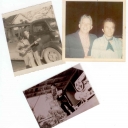
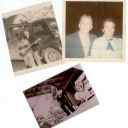
Images (clockwise from top left) :  Stanley Hicks playing banjo on front porch, Leonard Glenn with homemade banjo, Stanley Hicks playing dulcimer with unidentified, Stanley Hicks' personalized mailbox, circa 1986. 

The soon to be completed and available for research AC.510: William Spencer Photograph Collection contains photographs of musicians and artists noted throughout the Appalachian Region. Featured above are Stanley Hicks and Leonard Glenn, both noted musicmakers and luthiers from Watauga County, North Carolina.


Summers County, West Virginia Music Project

During the summer and fall of 1981 Appalachian State students Deborah Thompson and Randi Silnutzer traveled throughout southern West Virginia documenting the musical culture local to the area in and around Summers County. The project resulted in 23 hours of oral histories and music featuring musicians versed in the traditions of gospel, old time fiddle tunes, bluegrass, and country. Musicians recorded included Ralph and Rhodetta Jones, Ernie Davis, Elva Johnson, Eddie Cales, Joe Meadows, Mabel and Michelle McCoin, Jim Costa, Terry Upton, Josh Arnold, Kathleen Lilly, and Herman Lively. The collection also contains recordings of community events such as the Summers County Singing Convention and the Community Benefit Concert at Jumping Branch Elementary School. AC.202: Summers County, West Virginia Music Project presents a number of oral histories and performances which capture the musical heritage of the central and southern portions of the Appalachian region.

"My Dear Mr. Moody..."

cone estate

The idyllic image of the European country estate has been a recurring theme with popular literature and (more recently) in film for nearly two centuries. In the late nineteenth century the mountains of western North Carolina served as a backdrop for several envisionings of this romanticized lifestyle brought into reality by gentry lacking in ancient European lineage but rich in American industrial wealth. One such contrivance of manorial life belonged to the family of Moses and Bertha Lindau Cone.  Moses, born to Jewish immigrants in the mountain town of Jonesborough, Tennessee, was raised in Baltimore, Maryland within a large family that included nine siblings. The Cones originally found financial success in the grocery business but later emerged at the head of a textile empire centered in the piedmont of North Carolina.

Although relatively dwarfish by comparison to Biltmore Estate, George Vanderbilt's 125,000 acre "mountain retreat" completed in the 1880s, the Cone's 3,500 acre Flat Top Manor channeled a rustic grandeur which hearkened back to the manors and villas of Europe. Throughout the early twentieth century the expansive property housed tenant workers engaged in tasks ranging from the raising of purebred Shropshire sheep to the maintenance of an estimated 10,000 apple trees contained within the estate's orchards. The manor house, completed in 1901, is now the centerpiece of Moses Cone Memorial Park located on the Blue Ridge Parkway.

The Moses Cone Estate Collection (AC.132) located here in the archives contains correspondence and a ledger regarding the operations of the estate from 1905 until 1945. The correspondences between Bertha Cone (the estate's head after Moses' death in 1908) and A. C. Moody, the estate's manager, reveal much about the daily operations of the property. Many of the letters beginning "My Dear Mr. Moody..." address topics such as the sale of sheep and the pay of estate employees. The Moses Cone Estate Collection presents researchers with an opportunity to explore the history of a unique and opulent subculture within Appalachian life, one which settled visions of the Old World within the landscape of the Carolina mountains.    

Smyth County Virginia Lifetime Collection

For any researcher interested in the social history of Appalachia AC.321: Smyth County Virginia Lifetime Collection provides an invaluable cross-sectional view of a southwest Virginia mountain community. From milltown life at Saltville to the streets of downtown Marion circa 1950 to family farm life in the early 1900s, materials within the collection cover the entire spectrum of vocations and cultures which informed and built lives within Smyth County. Researchers can follow the mountain ministry of Lutheran missionary Kenneth Killinger, view scenes of 1940s era student life at a junior college for women, take a tour of author Sherwood Anderson's Ripshin Manor, learn the daily "ins and outs" of a local feed mill from 1885 to 1914, peruse court records from the mid-1800s, or even jot down a recipe from the Marion Cookbook. The documents and photographs held within the Smyth County Virginia Lifetime Collection constitute an indispensible primary resource for researchers and display an altogether holistic and multi-layered history of an Appalachian county.

Pages